Blog/Prospects read but don't book
Prospects Read My Emails but Don't Book: Why (2026)
Key takeaways
- About 22 people weigh in on a B2B buying decision, on average (13 inside the company, 9 outside, Forrester, nearly 18,000 buyers). The person reading your email is often one of them.
- Buyers also pick favorites early: 94% ranked a shortlist before they contacted any vendor, and they bought from their top pick 77% of the time (6sense, nearly 4,000 buyers).
- You can get more people on the buyer's side to know your name in 3 steps: get clear, get seen, follow up with the people who engage.
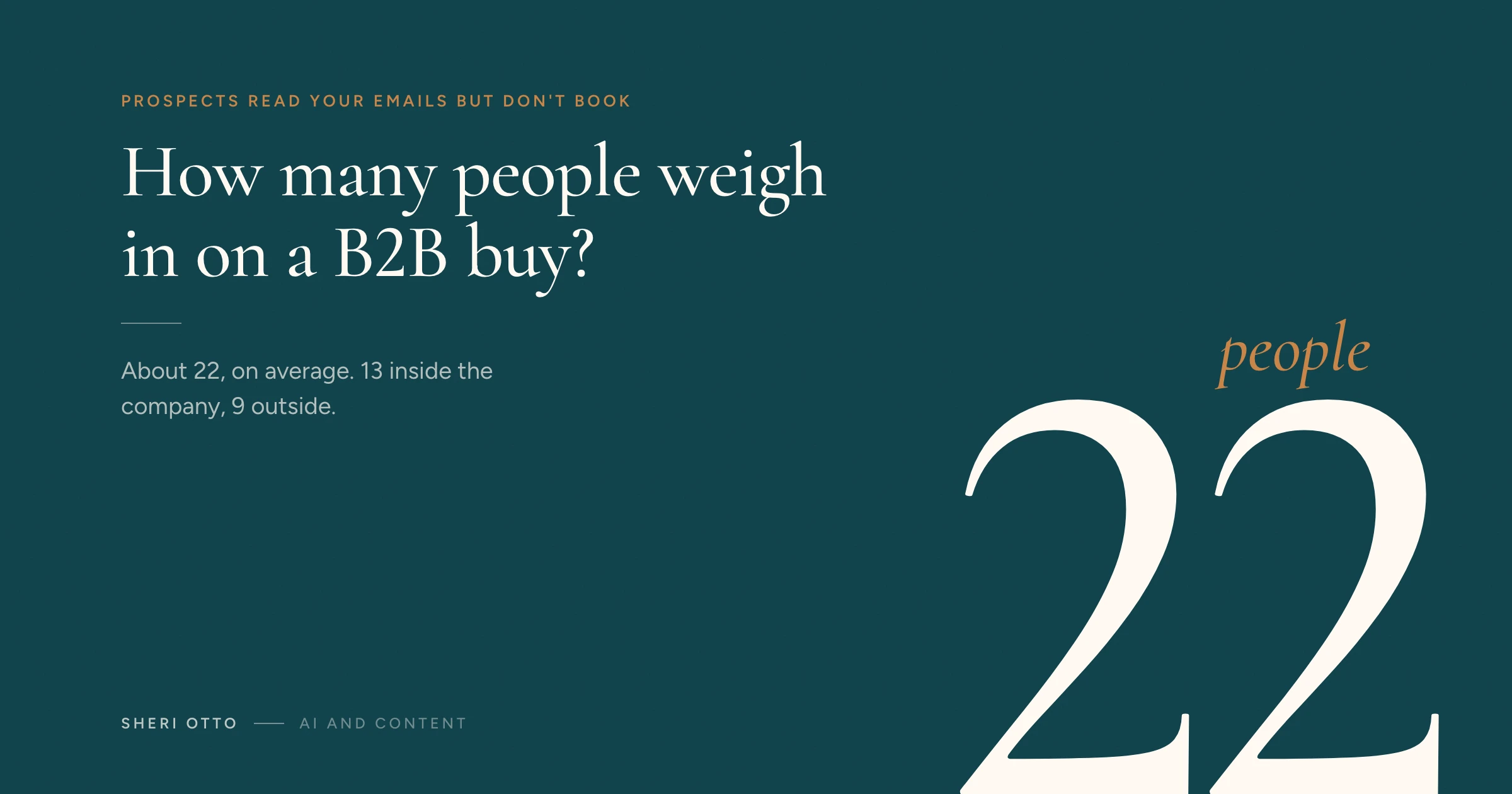
If you're a founder whose prospects read your emails but don't book, the person reading is often one of about 22 people who weigh in on the buy, and the other 21 may not know your name. This is my 3-step method, the one I use myself and with my clients: get clear, get seen, follow up.
Why do prospects read my emails but not book?
Buyers read your emails, look at your posts, and then remain quiet. A lot of founders feel this, and it's easy to take the silence as a no.
When I look at the studies below, I see a different reason. The person who reads your emails is usually not the only person who decides. And buyers often have favorites before they ever write to anyone. I think trust is how buyers pick those favorites. They lean on people they know more than on vendor marketing.
How many people take part in a B2B buying decision?
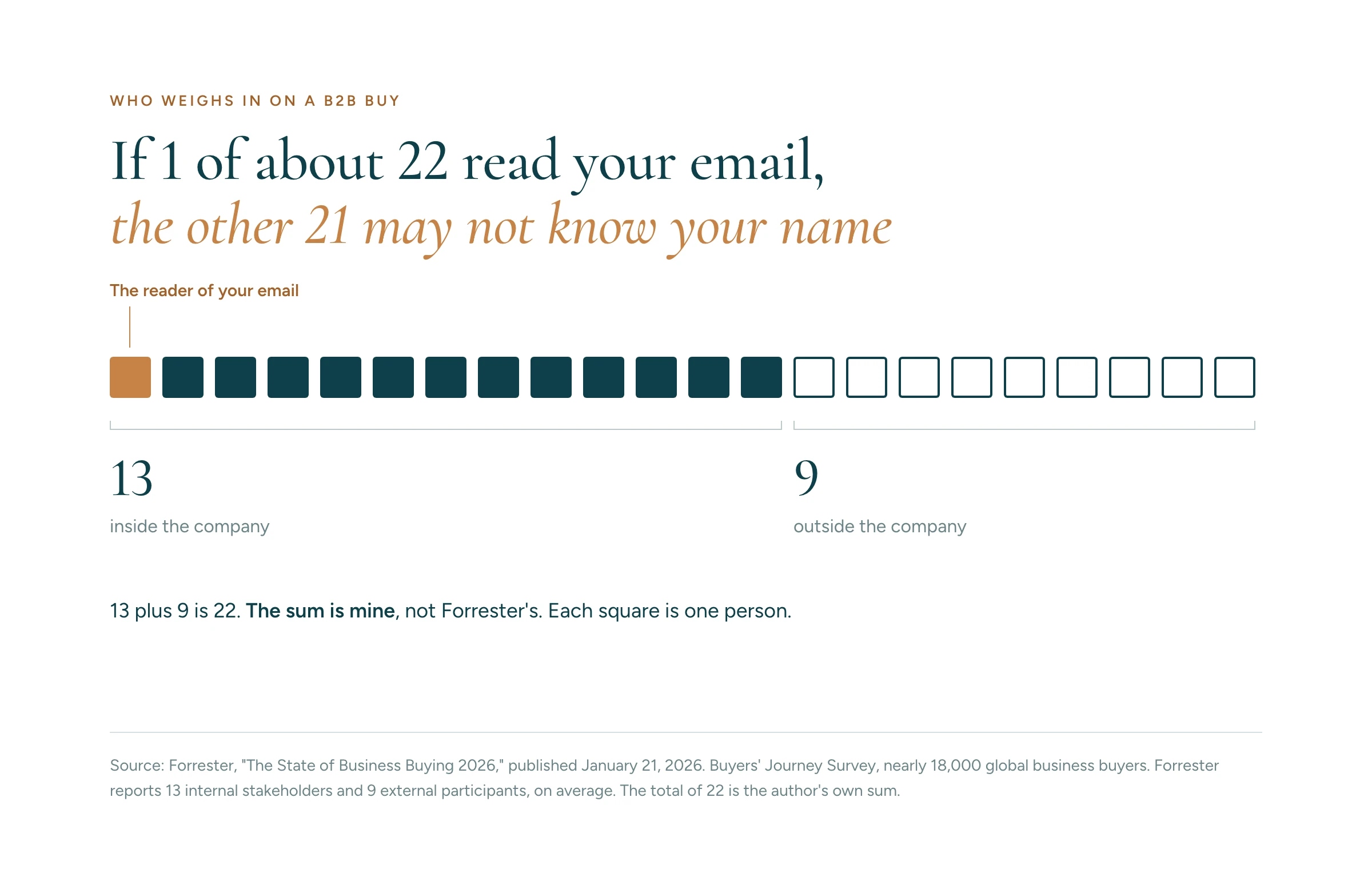
About 22, on average. Forrester's 2026 State of Business Buying says "13 internal stakeholders and nine external participants influence buying decisions," and the number goes up for more expensive or complex purchases. Forrester surveyed nearly 18,000 global business buyers and published the post on January 21, 2026.
13 plus 9 is 22. I added those up myself. If one of those 22 people has read your emails, the other 21 may not have.
Gong saw the same thing from the seller side. In 1.8 million sales opportunities it analyzed, "those that close successfully have twice as many buyer contacts as those that don't" (Gong, published January 16, 2026). Won deals involve more people on the buyer's side.
Do buyers pick a favorite before they reach out?
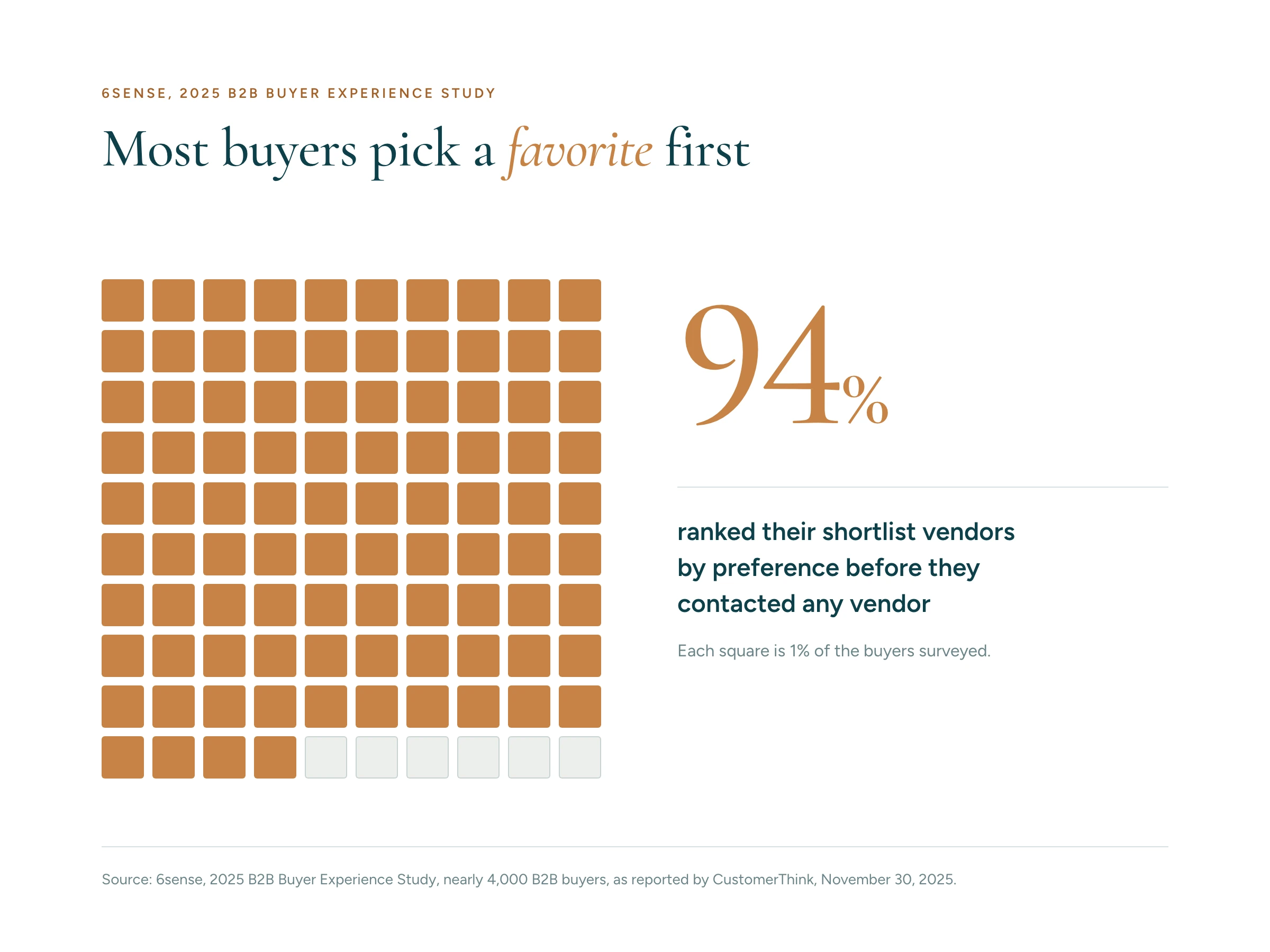
Many do. In 6sense's 2025 study of nearly 4,000 B2B buyers, 94% ranked their shortlist vendors by preference before they contacted any vendor. They bought from their top-ranked vendor 77% of the time.
So about 3 times in 4, buyers bought from the vendor they ranked first. That means the reader who stays quiet may have a list, and you may not be on it yet.
Do buyers trust what vendors send them?
Less than they used to. In the 2026 B2B Buying Disconnect report from TrustRadius (1,862 B2B technology buyers and 444 vendors; HG Insights write-up published July 15, 2026), 47% of buyers said they trust online resources less than before. 53% spoke to a peer during their buying process. "Vendor marketing collateral ranked dead last among resources buyers actually consult."
So I think a buyer's favorite is often a name they heard from a peer.
What should I do when prospects read but stay quiet? My 3-step method
So the reader who stays quiet may already have a favorite, and the other 21 may not know your name.
Buyers book the people they already trust. I help you become that person.
- Get clear. Know what makes you different, your story, and what gets people to take the next step. Say it in one sentence that a stranger could repeat to a colleague. The other 21 may only hear about you from the one who read your email. Free tool: before you send your next email, paste it into FixMyEmail.ai. It's free, and you get a sharper version plus what changed and why.
- Get seen. Show up the way that feels right to you. Use the camera only if you want to. Pick the place where your buyers already are, and show up there every week, so your name is the one they know when they start to buy.
- Follow up. Engage with the engaged. When someone reads, clicks, comments or replies, write back to that person first, and ask who else on their side should hear from you. Do your research, then help in a way they would call helpful. Be a partner in what they're trying to achieve, not a pest. Learn their goal and help them reach it faster, better or cheaper. That's when their guard comes down. They start to share their challenges, because reciprocity kicks in: you helped them, so now they want to open up to you.
What did the get seen step look like for one client?
Shelia owns a construction business. A barber she hadn't seen in about a year and a half called her. He had been watching her videos, and the man in his chair was a dentist. The dentist then called her about 3 projects.
One person who knew her name told a second person. That's how the other 21 can hear your name. In Shelia's story, you only see the get seen step at work. Shelia went from no online presence to 3 new project conversations (her video testimonial, September 2026, and a recorded call, September 3, 2026). Read Shelia's story →
Your numbers will be your own. I won't promise you hers.
My take: who else needs to hear your name?
I believe most founders keep rewriting the email when the better question is who else is in the room.
Buyers book the people they already trust. A reader who can't explain you to the other 21 people has nothing to pass along.
If your prospects stay quiet, that doesn't always mean no. It often means not yet, or that something isn't quite right.
That's my opinion, built on my own work and my clients' work. It's not a law.
For a look at the email itself, read my post on how long a cold email should be.
What this data can and can't show
- These are surveys and sales data, not a test of your emails. None of them measures how many email readers book. I looked for a number on that, I couldn't find a clean one, and I won't give you one.
- The 22 people is an average, and I added it up myself. Forrester says that number goes up for bigger or more complex purchases, so a smaller sale may involve fewer people.
- Every source sells something. Forrester sells research, Gong sells sales software, 6sense sells buyer-intent software, and TrustRadius runs a peer review site.
- Gong shows a link, not a cause. Deals that go well may collect more contacts because they are going well.
- I didn't open every original report. I read Forrester's and Gong's posts directly. The 6sense percentages came through a CustomerThink round-up.
FAQ
Why do prospects read my emails and not reply?
Often they are one of several people in the decision, or they already have a favorite. In 6sense's 2025 study, 94% of nearly 4,000 buyers ranked a shortlist before they contacted any vendor.
How many people are involved in a B2B purchase?
About 22 on average, per Forrester: 13 inside the company and 9 outside. Bigger purchases involve more.
What is Sheri Otto's 3-step method for getting buyers to book?
Get clear on your message, get seen in the way that feels right to you, and follow up with the people who engage. Buyers book the people they already trust, and the method is how I help you become that person.
Do I need to be on camera?
No. Get seen the way that feels right to you. Use the camera only if you want to.
Is a reader who stays quiet a lost buyer?
Not always. Some are not ready, and some need to explain you to others first. Keep showing up every week, so your name is the one they know when they start to buy.
About Sheri Otto
Sheri Otto has spent 15 years in growth marketing, including her time at HubSpot. She co-hosted HubSpot's first INBOUND webinar and is a HubSpot UNBOUND26 Insider. More about Sheri →
Sources
- Forrester, "The State of Business Buying 2026," January 21, 2026 (Buyers' Journey Survey, nearly 18,000 global business buyers, survey from the prior year). https://www.forrester.com/blogs/state-of-business-buying-2026/
- Gong, "The best sales insights of 2025," published January 16, 2026, last modified May 27, 2026 (1.8 million opportunities, no date range given for the 1.8 million). https://www.gong.io/blog/the-best-sales-insights-of-2025
- 6sense, 2025 B2B Buyer Experience Study (nearly 4,000 buyer responses), as reported by David Dodd, "Research Round-Up: 6sense Study Provides Critical Insights on B2B Buyer Behavior," CustomerThink, November 30, 2025. https://customerthink.com/research-round-up-6sense-study-provides-critical-insights-on-b2b-buyer-behavior/
- TrustRadius (HG Insights), "Trust More, Verify Everything: the 2026 B2B Buying Disconnect report," July 15, 2026 (1,862 B2B technology buyers and 444 vendors; HG Insights write-up published July 15, 2026). https://hginsights.com/blog/trust-more-verify-everything-what-the-2026-b2b-buying-disconnect-report-says-about-where-buying-is-actually-heading/
- Shelia: video testimonial (September 2026) and recorded call (September 3, 2026). Internal.

Free tool
FixMyEmail.ai
Paste your last email. Get a sharper rewrite, plus what changed and why. Free for 10 rewrites a day.
Fix my email, free →