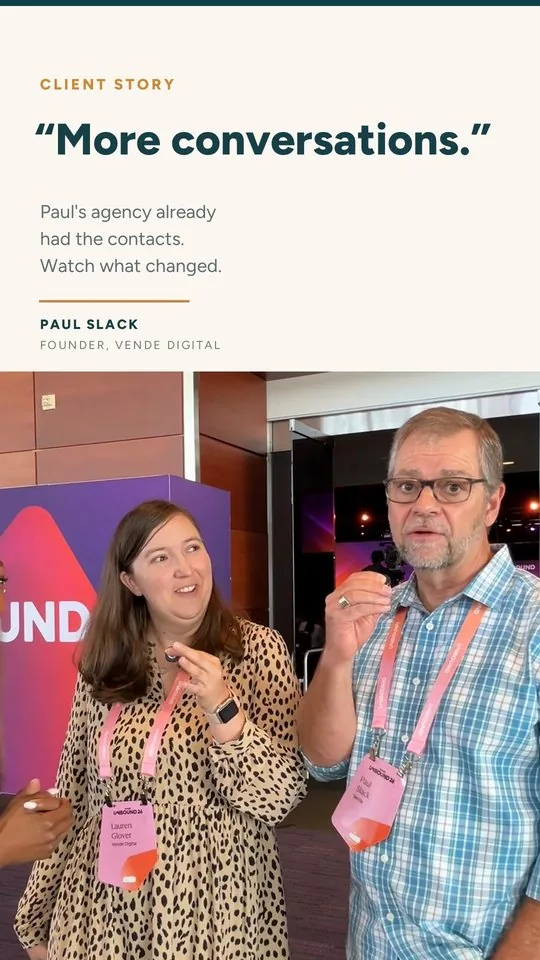
What changed.
| Before | After | |
|---|---|---|
| Who gets it | One big list | Cohorts, based on what they knew about each person |
| The ask | "Let's meet and have a sales pitch" | A question: "call to learn more, call to help you more" |
| Why they got it | Not always clear | Each person knew why the email came to them |
| Who replies | Few people | Hand-raisers with "a real problem" |
Make it easy to answer.
Lauren set three goals: the right content to the right person, a clear reason for every email, and as little risk as possible in replying.I wrote emails that asked one easy question.The one that drew the first reply asked the reader to name a number in two words.
The hand-raisers that have come in are the kind that we love. They're not saying, 'Hey, I want to have a meeting. I'm ready for you to pitch.' But they're like, 'I've got a real problem, and I need to talk to an expert to think through it.'
What this does and doesn't show
No revenue numbers yet. The first win was one booked meeting and one detailed reply, written up by Paul on Aug 26.
Two and a half weeks is my timing. Paul and Lauren agreed on camera.
The short answers
Did they need new contacts?
No. They had 6,000 to 7,000 contacts already. The emails changed, not the list.
What made people reply?
A question instead of a sales pitch. In Paul's words, "a call to learn more, call to help you more."
How fast did it work?
The first hand-raisers came in about two and a half weeks after go-live.
Your work is good. So what's in the way?
In 20 minutes, find the one gap slowing you down (your message, your data, your team or your time) and the first move to close it. A person looks at it with you, not a bot.